

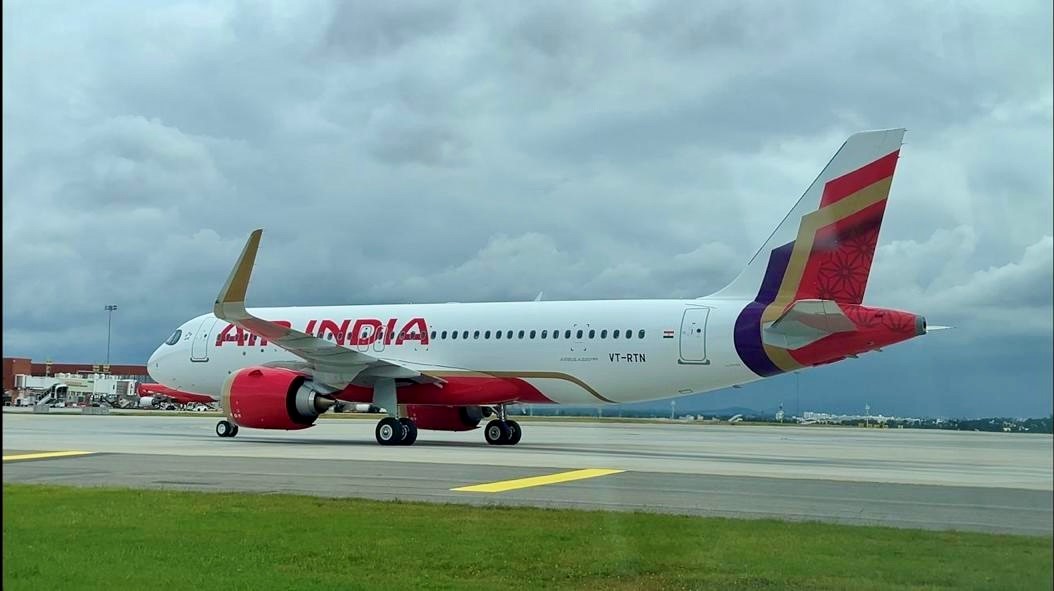
The Air India Group has announced a phased implementation of fuel surcharges across its domestic and international network, citing a sharp rise in aviation turbine fuel (ATF) prices driven by geopolitical tensions in the Gulf region. The revised surcharge structure will be introduced in stages beginning 12 March 2026 and will apply to both Air India and Air India Express flights.

According to the airline, ATF – which accounts for nearly 40% of an airline’s operating costs — has witnessed a steep increase in recent weeks due to supply disruptions linked to the evolving geopolitical situation in West Asia. The impact of higher fuel prices is further amplified in India by relatively high excise duties and state-level VAT on jet fuel, placing additional pressure on airline operating economics.
Phase-wise Implementation
Phase 1, applicable for all new bookings made from 0001 hrs IST on 12 March 2026:
| Region | Current Fuel Surcharge | Increase in Fuel Surcharge | Revised Fuel Surcharge |
| Domestic India | Not applied | INR 399 | INR 399 |
| SAARC | Not applied | INR 399 | INR 399 |
| West Asia / Middle East | Not applied | USD 10 | USD 10 |
| Southeast Asia2 | USD 40 | USD20 | USD 60 |
| Africa | USD 60 | USD 30 | USD 90 |
| 2Fuel surcharge is currently not applied on flights to/from Singapore but shall apply from Phase 1 | |||
Phase 2, effective for bookings made from 18 March 2026, will apply to long-haul international routes:
| Region | Current Fuel Surcharge | Increase in Fuel Surcharge | Revised Fuel Surcharge |
| Europe | USD 100 | USD 25 | USD 125 |
| North America | USD 150 | USD 50 | USD 200 |
| Australia | USD 150 | USD 50 | USD 200 |
Phase 3 will cover Far East markets including Hong Kong, Japan and South Korea, though the airline said details for this stage will be announced later.
Impact on Passengers
Air India clarified that tickets issued before the effective dates will not attract the revised fuel surcharge, unless passengers modify their travel dates or itineraries, which would require a fare recalculation.
Industry observers note that the surcharge could push up ticket prices across multiple markets served by the airline, particularly on domestic routes where a separate fuel surcharge was not previously levied.
Airline Response to Rising Costs
Air India said the decision to introduce the surcharge was not taken lightly but was necessary to maintain operational sustainability. The airline warned that without such adjustments, certain flights could become financially unviable due to rising fuel costs.
The airline also indicated that the surcharge levels will be reviewed periodically and may be revised depending on future fuel price trends and global developments.
The move comes at a time when airlines globally are grappling with volatility in fuel prices. Geopolitical tensions in West Asia have triggered a sharp spike in crude oil and jet fuel prices, forcing carriers to reassess cost recovery strategies.
Air India, which returned to the Tata Group in 2022 and is currently undergoing a major transformation under its Vihaan.AI strategy, continues to expand its fleet, network and product offerings as part of a long-term plan to rebuild the airline as a leading global carrier from India.