

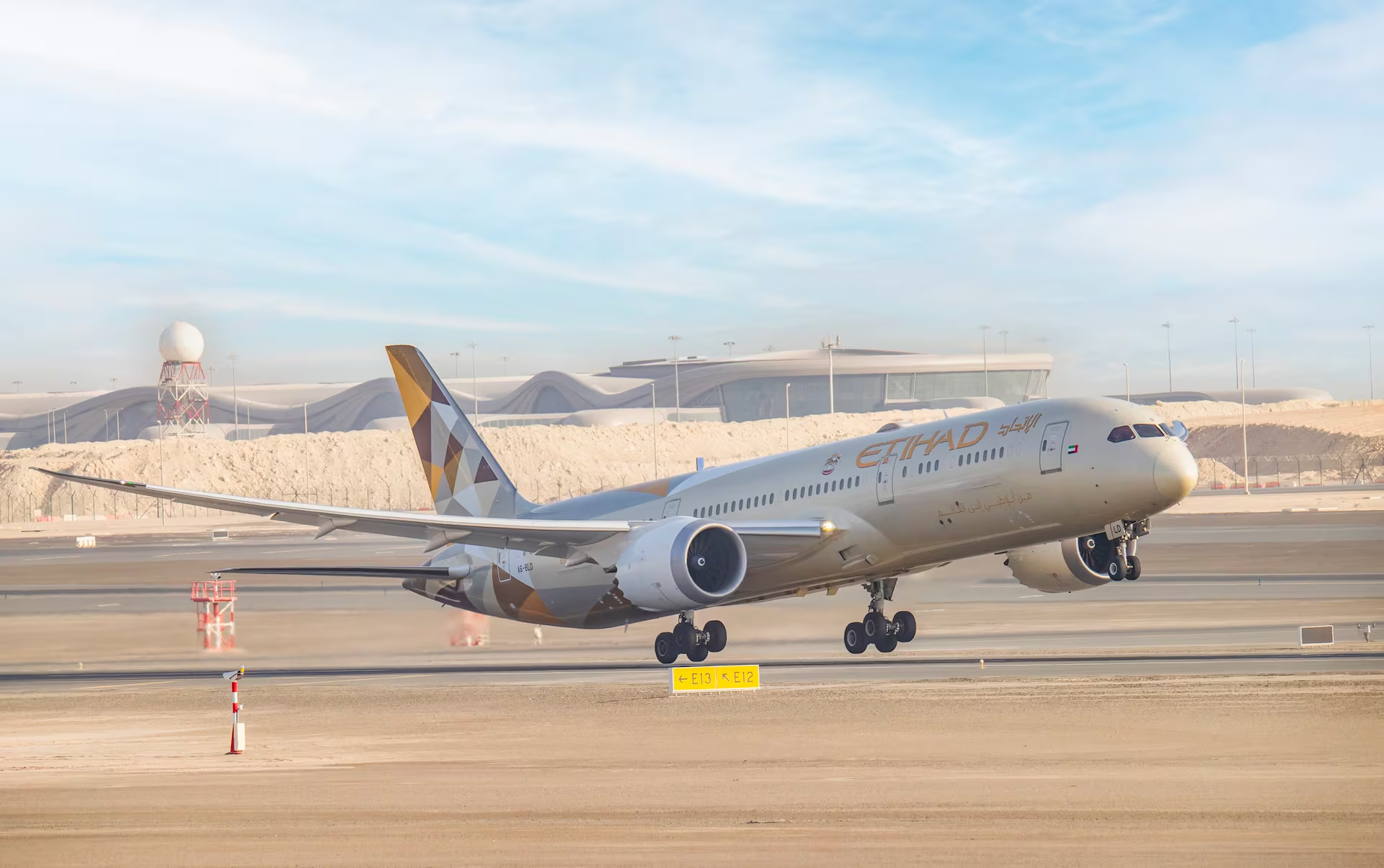
Etihad Airways has announced the gradual resumption of a limited commercial flight schedule starting 6 March 2026, marking the first step toward restoring operations after widespread aviation disruption across the Middle East. The move comes as regional airspace restrictions begin to ease following several days of conflict-related closures that forced airlines to suspend or severely limit services.

The Abu Dhabi-based carrier said the limited schedule will reconnect Abu Dhabi’s Zayed International Airport with a number of key international destinations, including major cities such as Delhi and Cairo, as authorities allow operations to restart under strict safety and regulatory oversight.
Gradual restart after regional shutdown
Etihad had earlier suspended all scheduled commercial flights to and from Abu Dhabi until 06:00 UAE time on 6 March, following extensive airspace closures across the Middle East.
During the suspension period, the airline operated only a small number of repositioning, cargo and repatriation flights, coordinated with UAE authorities to assist stranded passengers and maintain essential connectivity.
Passengers were advised not to travel to the airport without confirmed bookings, as airport access and flight operations were tightly controlled during the disruption period.
Conflict-driven aviation disruption
The disruption to Gulf aviation stems from the escalating geopolitical crisis involving U.S., Israeli and Iranian hostilities, which triggered missile strikes and retaliatory actions across parts of the region. The security situation led multiple countries to temporarily close their airspace, grounding thousands of flights and severely affecting major global aviation hubs such as Dubai, Abu Dhabi and Doha.
At the peak of the disruption earlier this week, more than 1,700 flights were cancelled across the Middle East, creating the largest aviation disruption in the region since the COVID-19 pandemic.
Airlines slowly restoring operations
With airspace restrictions gradually easing, several international and regional airlines have begun restoring operations in phases. Gulf carriers such as Emirates and Etihad, along with international airlines, are prioritizing limited services to move stranded passengers and restore critical routes.
Indian carriers have also begun restarting services to the Gulf. According to industry updates, airlines including IndiGo and Air India have resumed a limited number of Middle East flights, while additional services are being deployed to handle the backlog of passengers affected by the disruptions.
Industry analysts say it may take several days before flight schedules return to normal, as airlines reposition aircraft, crew and manage the ripple effects across global networks.