

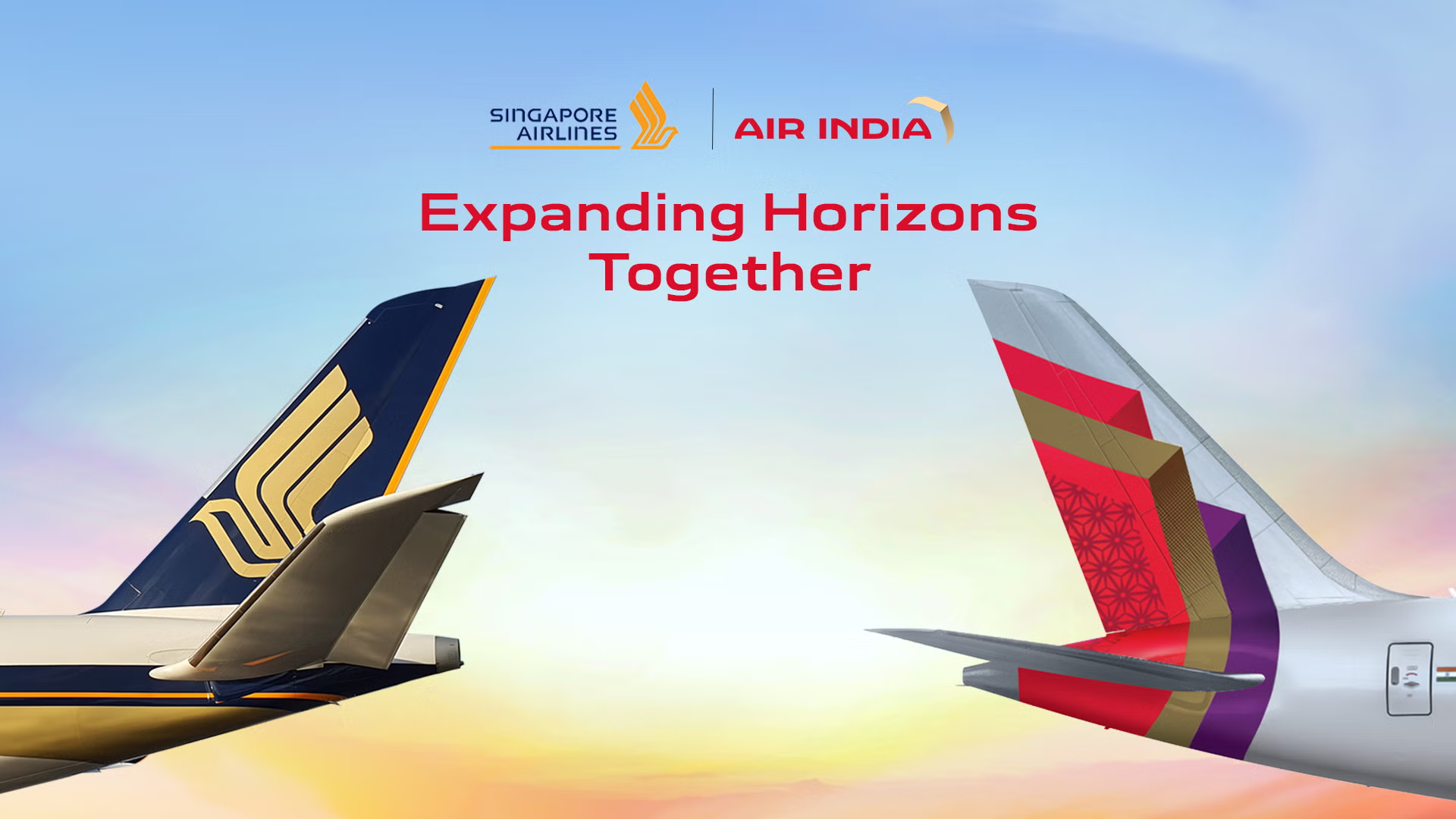
In a significant development for Asia-Pacific aviation, Air India and Singapore Airlines (SIA) have signed a Commercial Cooperation Framework Agreement, setting the stage for a deeper and more integrated partnership between the two full-service carriers.

The agreement, formalised in Mumbai by Air India CEO & MD Campbell Wilson and SIA CEO Goh Choon Phong, marks a strategic step toward establishing a comprehensive joint business arrangement, subject to regulatory approvals.
Strengthening Connectivity and Network Synergies
At the core of the agreement is a shared objective to enhance connectivity between India and Singapore while unlocking broader global network opportunities. The partnership will enable both airlines to explore coordinated scheduling, expanded route options, and seamless connections across their combined networks.
Passengers can expect the eventual ability to book unified itineraries across both carriers, improving travel convenience and reducing fragmentation across journeys.
The move builds on an already extensive codeshare relationship, which currently spans dozens of destinations across multiple countries, and signals a shift toward a more aligned commercial strategy.
Enhanced Customer Experience and Loyalty Integration
The proposed cooperation also aims to elevate customer experience through deeper integration of products and services. This includes potential enhancements to corporate travel programmes and closer alignment of frequent flyer benefits between Air India’s Maharaja Club and SIA’s KrisFlyer programme.
Importantly, the airlines are exploring benefits that could extend beyond existing Star Alliance reciprocity, offering added value to premium and frequent travellers.
Beyond India–Singapore: A Broader Strategic Vision
While the initial focus remains on strengthening India–Singapore traffic flows, both carriers have indicated plans to expand cooperation into select international markets. This could support growing demand for global connectivity and optimise hub traffic through Singapore and major Indian gateways.
Industry observers note that such collaboration could also help reduce network overlap, improve efficiency, and better position both airlines in key long-haul and corporate travel segments.
Strategic Context
The agreement reflects a natural evolution of the long-standing relationship between the two airlines, further reinforced by SIA’s equity stake in Air India. It also aligns with Air India’s broader transformation strategy under the Tata Group, which focuses on fleet modernisation, network expansion, and global partnerships.
Looking Ahead
Both airlines have emphasised that the framework agreement serves as a foundation for future collaboration, with detailed joint business plans expected to follow once regulatory approvals are secured.
If fully realised, this partnership could emerge as one of the most influential bilateral airline collaborations in the region, reshaping connectivity between South Asia, Southeast Asia, and beyond.