

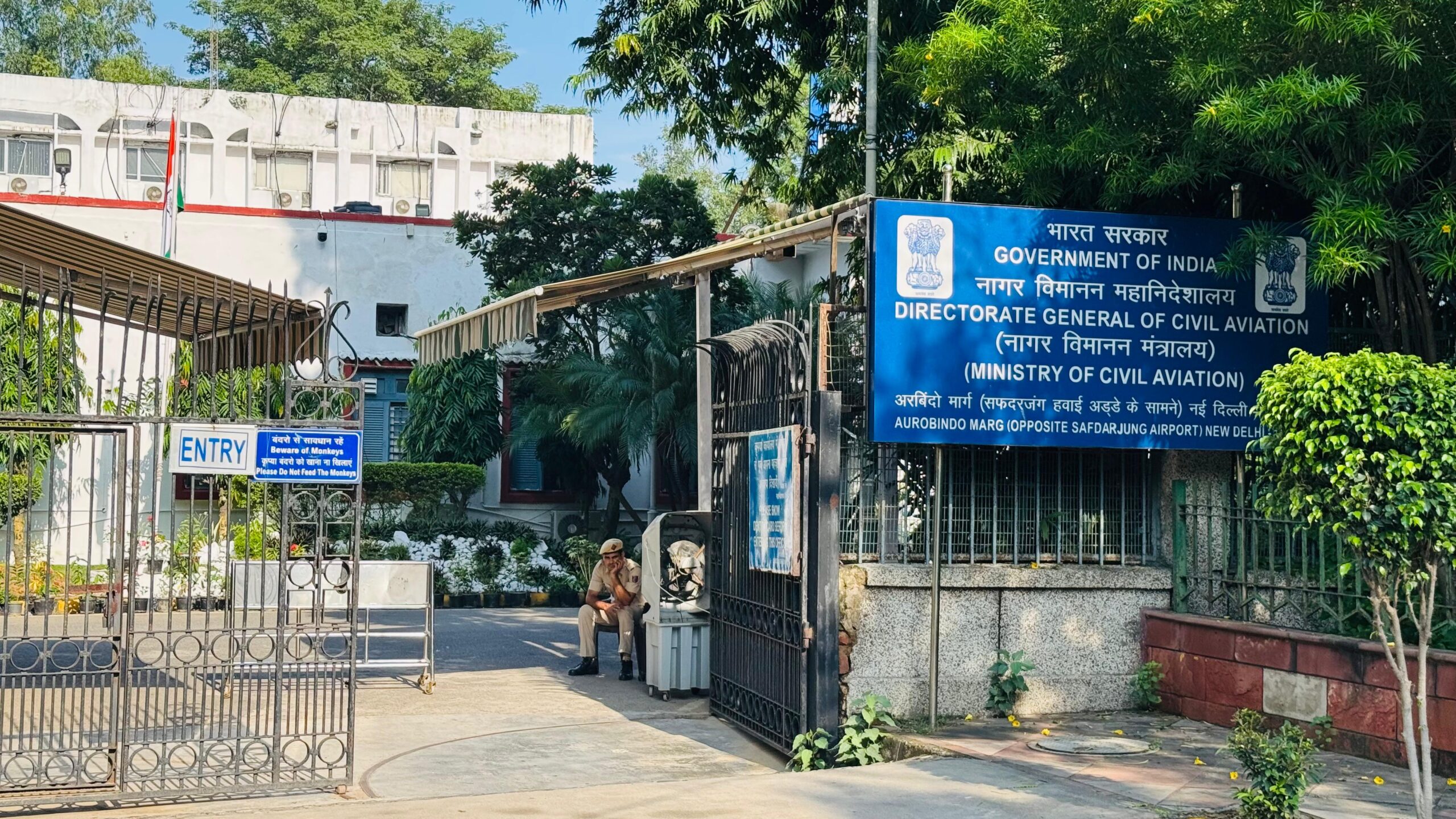
India’s aviation regulator, the Directorate General of Civil Aviation (DGCA), has issued a series of safety advisories to Indian carriers amid escalating security concerns across the Middle East and Persian Gulf airspace, underlining a rapidly evolving threat environment impacting global aviation.

The regulator confirmed that six separate safety advisories have been released between February 28 and March 19, 2026, reflecting a continuous assessment of risks in the region. These advisories come in response to heightened geopolitical tensions and recent military developments that have significantly disrupted civil aviation operations.
The DGCA has directed all Indian operators to undertake comprehensive Safety Risk Assessments before continuing or planning any operations through affected airspace. The emphasis remains on proactive threat identification and mitigation to safeguard both aircraft and passenger safety.
Escalating Regional Threat Environment
The advisories follow a sharp deterioration in the security situation across West Asia, where ongoing military conflict, including drone and missile activity, has directly impacted aviation infrastructure and airspace availability. Recent incidents, including attacks near key Gulf aviation hubs, have heightened concerns for civil aviation safety worldwide.
In response, multiple high-risk airspaces across countries such as Iran, Iraq, UAE, and surrounding regions have been flagged, with Indian carriers already rerouting or suspending services on several routes.
Operational Impact on Airlines
Airlines have been forced to adopt longer alternate routes, leading to increased fuel burn, extended flight durations, and potential schedule disruptions. In some cases, flights have required technical stops for refuelling, while others have faced cancellations due to rapidly changing airspace restrictions.
The DGCA’s advisory framework remains non-binding but strongly recommendatory, allowing airlines operational flexibility while ensuring safety remains the top priority. This approach aligns with global best practices, where regulators provide risk-based guidance rather than outright bans unless absolutely necessary.
Alignment with Global Safety Agencies
The Indian regulator has based its advisories on continuous safety monitoring and inputs from international agencies, including the European Union Aviation Safety Agency (EASA), ensuring alignment with global aviation risk assessments.
Industry-Wide Ripple Effects
The broader aviation ecosystem is already witnessing the impact. Indian carriers, along with global airlines, are recalibrating flight planning strategies, while pilots and operators are being urged to remain vigilant. Parallel advisories from pilot associations have also stressed the importance of verifying war-risk insurance coverage for operations in conflict-prone zones.
A Proactive Safety Approach
The DGCA’s measured response highlights a shift towards dynamic, intelligence-driven safety oversight. Rather than a single directive, the regulator has adopted a rolling advisory mechanism, allowing airlines to adapt in real time as the geopolitical situation evolves.
For now, operations continue under heightened caution, with safety assessments forming the backbone of every flight decision through one of the world’s most strategically critical yet volatile airspace corridors.