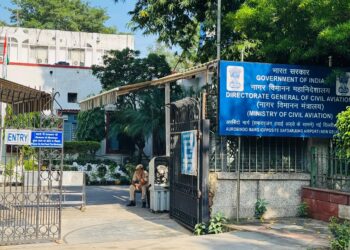


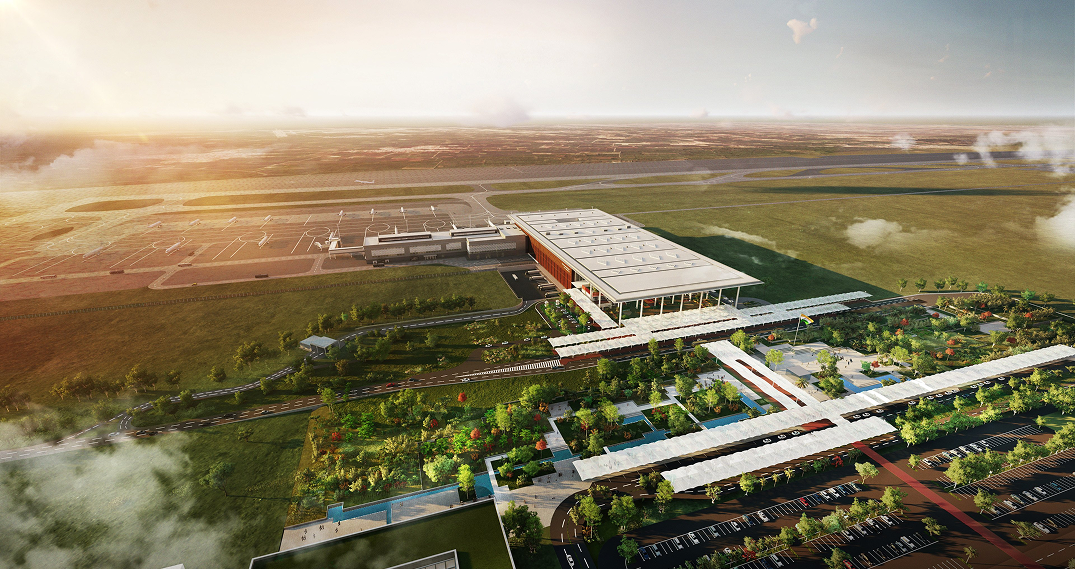
India’s upcoming Noida International Airport has received its aerodrome licence from the Directorate General of Civil Aviation (DGCA), marking a significant step towards the start of commercial flight operations at the greenfield airport in Jewar, Uttar Pradesh. The licence certifies that the airport’s infrastructure, safety systems, operational procedures and air navigation facilities meet the regulatory standards prescribed under the Aircraft Rules, 1937.

The certification, issued under Rule 78 of the Aircraft Rules, confirms that the airport complies with DGCA’s Civil Aviation Requirements relating to operational readiness, airside infrastructure, safety management and emergency response mechanisms. The development represents a major regulatory milestone in the commissioning of what is set to become one of India’s largest airports.
The approval comes shortly after the airport secured security clearance from the Bureau of Civil Aviation Security (BCAS), which granted final security vetting for domestic passenger services as well as domestic and international cargo operations. Together, these approvals indicate that the airport is approaching the final stages before commencing commercial services.
However, the start of scheduled flight operations will be confirmed only after the approval of the airport’s Aerodrome Security Programme (ASP), which is currently under review by BCAS. Once the clearance is obtained, authorities will proceed with the formal inauguration, airline scheduling and ticket sales.
Christoph Schnellmann, Chief Executive Officer of Noida International Airport, described the licence as a crucial milestone in the project’s operational journey. He noted that the approval reflects the extensive collaboration between the airport developer, regulatory agencies and aviation partners to ensure the airport’s readiness for safe commercial operations.
Operational preparations at the airport are currently progressing under the Operational Readiness Activation and Transition (ORAT) programme, which ensures that airport systems, staff and operational processes are fully prepared before passenger services begin.
A major milestone in the airport’s development was achieved in December 2024 when IndiGo conducted a successful validation flight using an Airbus A320 aircraft. The flight tested the airport’s instrument approach procedures, navigational aids and air traffic control systems, confirming the facility’s readiness to handle aircraft movements.
Infrastructure development at the airport has largely been completed. Key concessions covering ground handling, aviation fuel supply, cargo services, in-flight catering, retail outlets, food and beverage operations, mobility services and the airport hotel have already been awarded. Communication and navigation systems have been commissioned by the Airports Authority of India.
Several Indian airlines have already confirmed plans to operate from the new airport, including IndiGo, Akasa Air and Air India Express. Discussions are also underway with additional domestic and international carriers, while cargo operators have shown strong interest in using the facility as a logistics hub.
Strategically located along the six-lane Yamuna Expressway, the airport will offer fast connectivity to Delhi, Noida, Greater Noida, Gurugram and cities across western Uttar Pradesh. Major tourist destinations such as Agra, Mathura and Vrindavan will be accessible within a two-hour drive.
The airport is being developed in four phases. In its first phase, the airport will feature a single runway and passenger terminal capable of handling 12 million passengers annually. Upon completion of all phases, the airport’s capacity is expected to expand to 70 million passengers per year, positioning it as a major aviation hub for northern India.
Developed under a public-private partnership model by Yamuna International Airport Private Limited, a wholly owned subsidiary of Zurich Airport International AG, the project carries a concession period of 40 years beginning October 2021. The airport aims to combine sustainable design, modern infrastructure and passenger-focused services, while supporting regional economic growth and connectivity across northern India.