

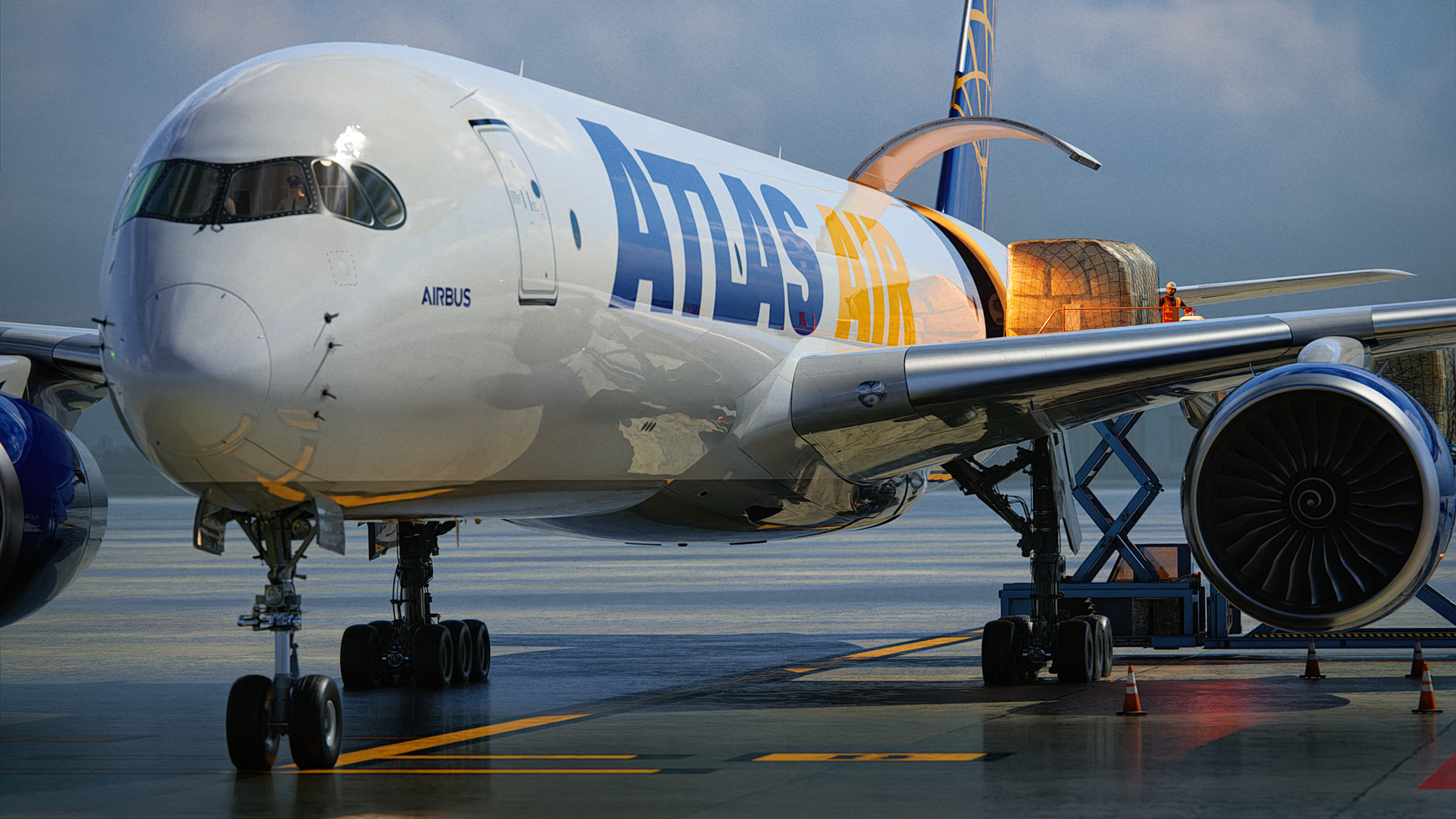
In a major development for the global air cargo market, US-based Atlas Air Worldwide has placed a firm order for 20 Airbus A350F freighters, marking the largest single commitment for the aircraft to date and positioning the operator as the biggest customer for the programme.

The order, announced by Airbus on March 16, is being seen as a decisive endorsement of the European planemaker’s next-generation freighter, which is yet to enter service.
A strategic shift in the cargo market
Atlas Air, long known as one of the world’s largest operators of Boeing-built freighters, is making a notable shift by introducing Airbus aircraft into its fleet for the first time. The company currently operates a large fleet of Boeing 747, 777 and 767 freighters across global cargo networks.
The A350F order is aimed at supporting future growth and modernising Atlas’ widebody fleet, particularly as the industry transitions toward more fuel-efficient and environmentally compliant aircraft.
Atlas Air Worldwide CEO Michael Steen said the order secures early delivery positions and reinforces the company’s focus on operating “the most modern and fuel-efficient widebody freighter fleet.”
Deliveries of the aircraft are expected to begin towards the end of the decade, with industry reports indicating an entry timeline around 2029.
Why the A350F matters
The Airbus A350F is being positioned as a clean-sheet, next-generation freighter designed to replace ageing aircraft like the Boeing 747-400F and older 777 variants.
Key highlights of the aircraft include:
- The largest main deck cargo door in the industry
- A structure built with over 70% advanced materials, reducing weight significantly
- Around 46 tonnes lower take-off weight compared to competing designs
- Full compliance with ICAO’s stricter CO₂ emissions standards coming into force in 2027
These features are critical at a time when cargo operators are under increasing regulatory and cost pressures to improve efficiency and reduce emissions.
Engines and long-term support
In parallel, Rolls-Royce confirmed that Atlas Air will equip the fleet with Trent XWB-97 engines, with a total order of 40 engines and long-term maintenance support under its TotalCare programme.
This combination is expected to deliver improved fuel burn, reliability, and lifecycle cost benefits; key considerations in long-haul cargo operations.
Industry implications
The deal significantly boosts Airbus’ position in the dedicated freighter segment, historically dominated by Boeing. It also pushes total A350F orders closer to triple digits, strengthening the programme’s commercial viability.
For the wider cargo industry, Atlas Air’s move signals a broader fleet transition already underway—away from converted freighters and older-generation aircraft toward purpose-built, fuel-efficient platforms.
What it means for India and global cargo flows
While the order is US-led, its impact will be global. Operators like Atlas Air serve major logistics players, e-commerce giants, and supply chains that connect key markets including India.
With Indian air cargo demand expected to grow sharply over the next decade; driven by manufacturing, pharma exports, and e-commerce—the induction of aircraft like the A350F will likely influence capacity availability, pricing, and efficiency across long-haul routes touching the region.